
To improve operational efficiency, Sibelga wanted to gain insight into the potential synergies between its two logistics teams, identify best practices for logistics activities, and optimise the physical flows on its central site.
Preparing the logistics organisation for future needs
Sibelga’s logistics department plays a key role in supporting operational activities. It ensures that employees always have access to the right materials and resources to carry out their work efficiently and at controlled costs. In addition, the department is responsible for maintaining a safe, high-quality and well-organised working environment for all employees and site users.
However, growing demand for materials — partly driven by the rollout of smart meters — was increasingly putting pressure on the existing logistics organisation. Sibelga therefore wanted to explore how its logistics operations could be made future-proof, with greater capacity, more efficient processes and improved flow across the central site.
More specifically, Sibelga wanted to evaluate several future scenarios in order to:
- increase storage capacity to accommodate future growth;
- reduce congestion on the main site through optimised logistics flows and infrastructure improvements;
- improve the efficiency of the logistics organisation by strengthening synergies between the two logistics teams and implementing best practices in processes, methods and tools;
- shorten lead times between the warehouse and field technicians, while organising transport more efficiently through decentralised delivery models.
As a first step, Sibelga was looking for an experienced partner to carry out a high-level logistics optimisation assessment and develop a business case demonstrating the value of further analysis and implementation.
From operational assessment to strategic scenarios
Following site visits, structured interviews and process analyses, Möbius gained a clear understanding of the logistics operations. In addition, we carried out data analysis to categorise inventory and map obsolete stock in terms of both quantity and value.
During the initial workshop, several improvement opportunities were discussed at both macro and micro level. These covered areas such as team collaboration, physical flows, infrastructure, information systems and processes.
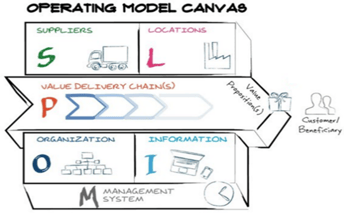
Based on the initial feedback, the team developed several scenarios to redesign Sibelga’s supply chain. These ranged from optimising the fully centralised logistics model — with improved capacity and flow at the current site — to an innovative decentralised model involving cross-dock hubs and direct deliveries to field locations.
By identifying the advantages and disadvantages of each scenario and translating them into business cases with estimated ROI, Sibelga was able to make a well-informed decision on the preferred direction.
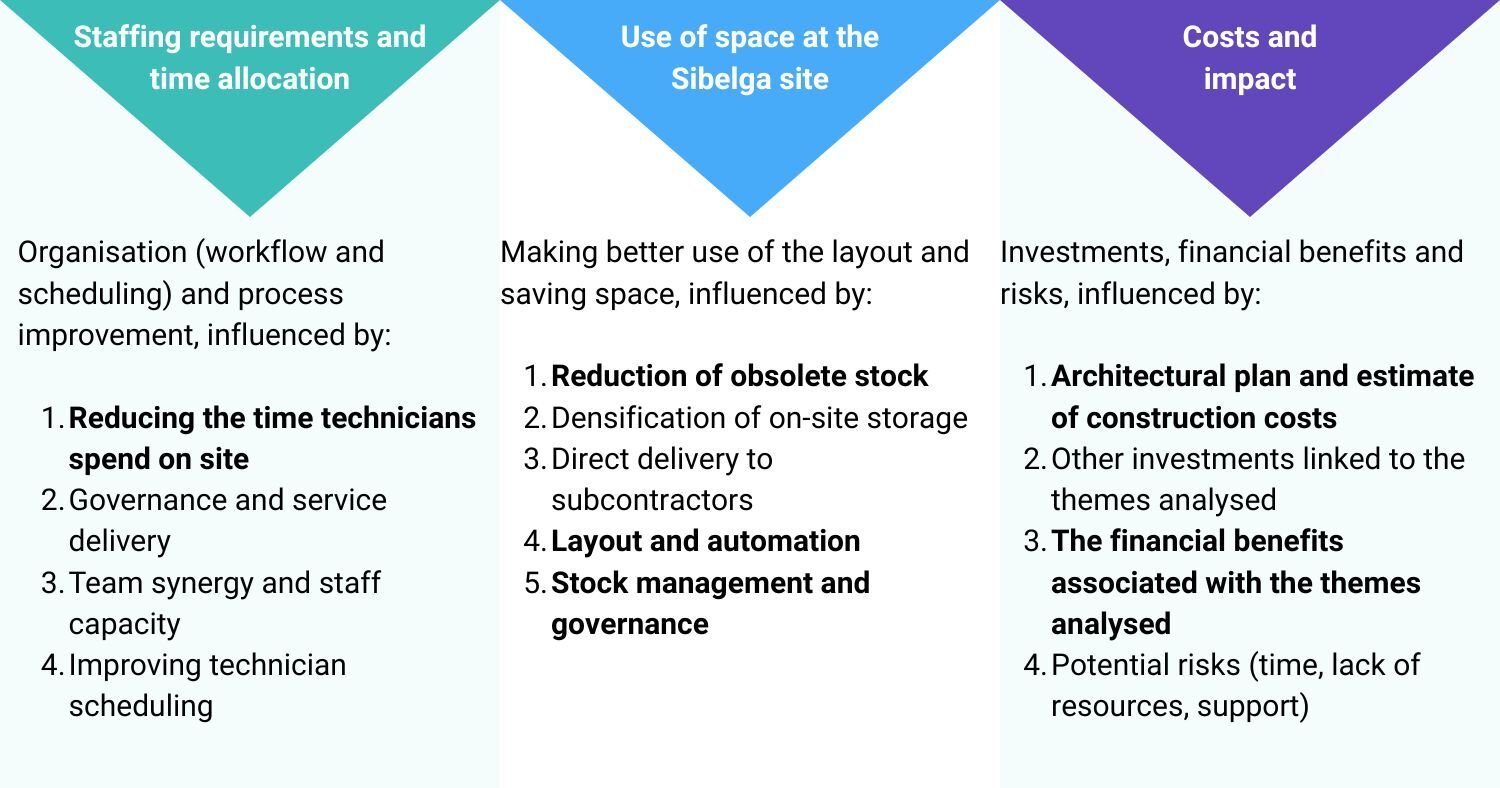
Reshape as the foundation for sustainable logistics transformation
Thanks to this project, Sibelga was able to make an informed decision in favour of a future-proof logistics operating model aligned with both current and future needs. At the same time, the project helped create a shared vision for the logistics organisation of the future. The involvement of multiple stakeholders throughout the project also contributed to more streamlined decision-making.
With a clearly documented list of improvements and an implementation roadmap in place, Sibelga is now ready to implement the necessary changes and address its capacity and efficiency challenges.
One year later, this work has become the foundation for Reshape, a broader transformation programme designed to ensure that technical teams always have smooth and reliable access to the materials they need. At the heart of the programme is a logistics service that is higher in quality, more flexible and simpler to operate.
As part of the programme, several structural improvement initiatives were prepared and analysed, including process and tool optimisation, the further development of the existing WMS to support the new operating model, and the assessment of automation and mechanisation solutions for the warehouse.