Shaping a Better Hybrid Workplace for the Future
What Is Activity-Based Working?
If you have worked in business over the past 20 years, you have probably heard terms like “activity-based working” or “new ways of working.” Whatever the label, the idea is the same: creating a modern workplace that adapts to the rhythms of today’s workday.
In a hybrid workplace filled with meetings, focused tasks, video calls and collaborative moments, one type of workspace is no longer enough. Activity-based working offers employees a variety of flexible workspaces designed to support different ways of working throughout the day.
Instead of staying at one desk from morning to evening, employees can move between spaces depending on their needs, tasks and preferred working style.
How Activity-Based Working Supports Hybrid Work
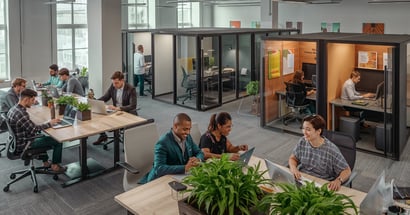
A successful hybrid workplace needs spaces that support both focus and collaboration. That is why activity-based working combines different types of work environments within the same office.
Need to concentrate? Head to the silent room and enjoy uninterrupted focus time.
Taking a one-on-one Microsoft Teams call? Use one of the bubbles for quiet, isolated work.
Planning a project meeting? Book a meeting room and collaborate face-to-face with colleagues.
Looking for an informal conversation? The coffee corner is always open and ready for spontaneous exchanges.
And of course, standard work desks remain available in every team zone.
By encouraging movement, flexibility and collaboration, activity-based working helps create a more connected and efficient workplace experience.
Flexible Workspaces Designed for Focus and Collaboration
Today’s employees divide their time between focused individual work, meetings, creative sessions and knowledge sharing. A modern workplace should support all of these activities equally well.
That is why we are investing in collaborative workspaces, improved office ergonomics and better employee wellbeing across every floor.
Spaces for Focused Work
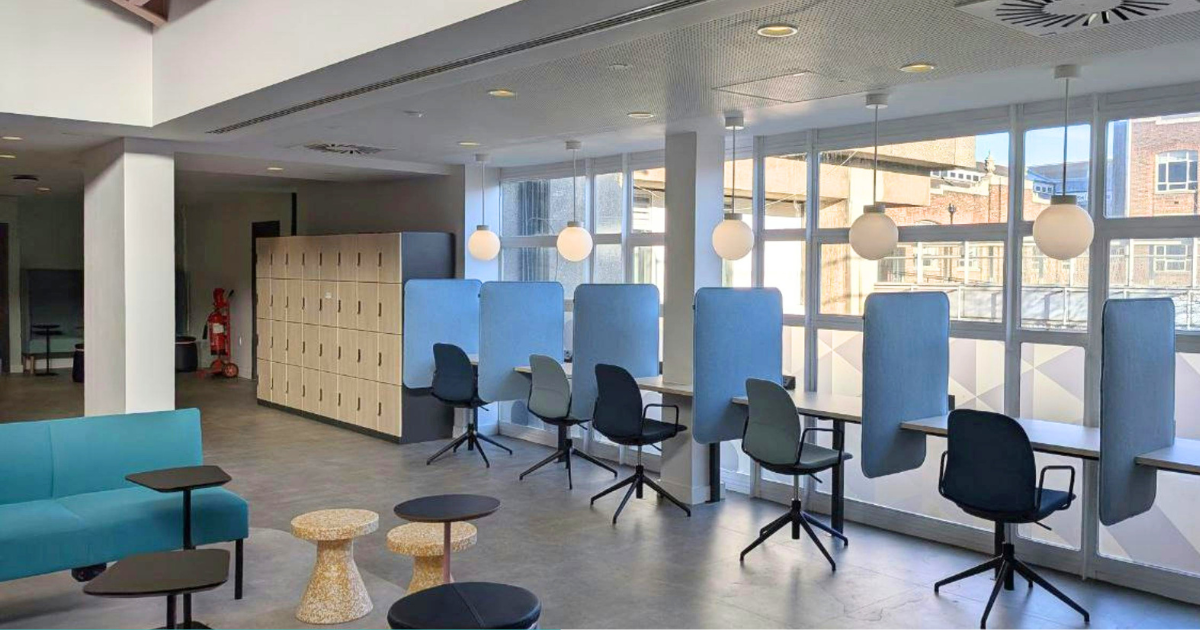
Focused work still represents a major part of the working day. To support productivity and workplace wellbeing, standard desks are evolving into height-adjustable workstations with improved acoustics and ergonomics.
Silent rooms and private bubbles provide employees with quiet spaces for concentration and virtual meetings.
Collaboration Spaces for Teams and Meetings
Research from Leesman’s Rhythms of Work 2025 confirms that meetings continue to play a central role in modern work environments. In a hybrid workplace, opportunities for spontaneous collaboration are reduced, making intentional collaboration spaces even more valuable.
Meeting rooms, team zones and project areas help teams work together more effectively while strengthening workplace connection and cohesion.
Informal Spaces That Encourage Connection
Not every productive conversation happens in a meeting room.
Coffee corners and informal seating areas create opportunities for quick exchanges, idea sharing and social connection throughout the workday. These moments play an important role in employee experience and workplace culture.
Clean-Desk Policies and Shared Workspaces Explained
With more flexible workspaces comes a new way of thinking about desk usage.
Instead of assigned desks, activity-based working introduces a desk-sharing approach. When employees work remotely or spend time in other areas of the office, their desks become available for colleagues who need them.
This approach improves workspace utilization while supporting flexibility across teams.
To make shared workspaces function smoothly, a clean-desk policy is essential. At the end of the day, desks should remain tidy and ready for the next colleague.
Personal belongings can be stored in lockers, shelves, storage boxes or pigeonholes within team zones, while shared team equipment and confidential documents remain safely stored in locked cupboards.
Why Team Zones Matter in a Hybrid Workplace
Even in a flexible office environment, employees still need a sense of belonging.
That is why each team is anchored within a dedicated team zone — a home base where colleagues can easily find one another and maintain strong team cohesion.
At the same time, employees remain free to work across different areas of the building whenever collaboration or project work requires it.
And yes — there are no dedicated offices. Not even for the CEO. Everyone works within the same shared and collaborative environment.
The Future of Workplace Design and Employee Experience
The future workplace is about much more than desks and meeting rooms. It is about creating an environment that supports employee wellbeing, flexibility, collaboration and performance.
No two employees experience the workday in the same way. Some need quiet focus time, while others thrive through interaction and movement. By offering a variety of workspaces, activity-based working allows everyone to choose the environment that best supports their productivity and comfort.
A better employee experience starts with giving people more choice, more flexibility and better workplace design.
Supporting Employee Wellbeing Beyond the Office
One important part of the workday is often overlooked: the commute.
Commuting can feel like wasted time. It can, however, become an opportunity to reflect, learn or recharge before the day begins.
As an organisation, we can improve the employee experience by supporting greener and more flexible commuting options. This includes:
- flexible work arrangements
- car-sharing initiatives
- cycling facilities
- safe bike storage
- showers and lockers
- commuter-friendly workplace amenities
And occasionally, breakfast for the brave colleagues arriving by bike.
A sustainable workplace is not only about energy-efficient buildings. It is also about helping employees start their day with more comfort, energy and ease.
Let’s shape that better workday together.

.jpg)