
What are ESG ratings?
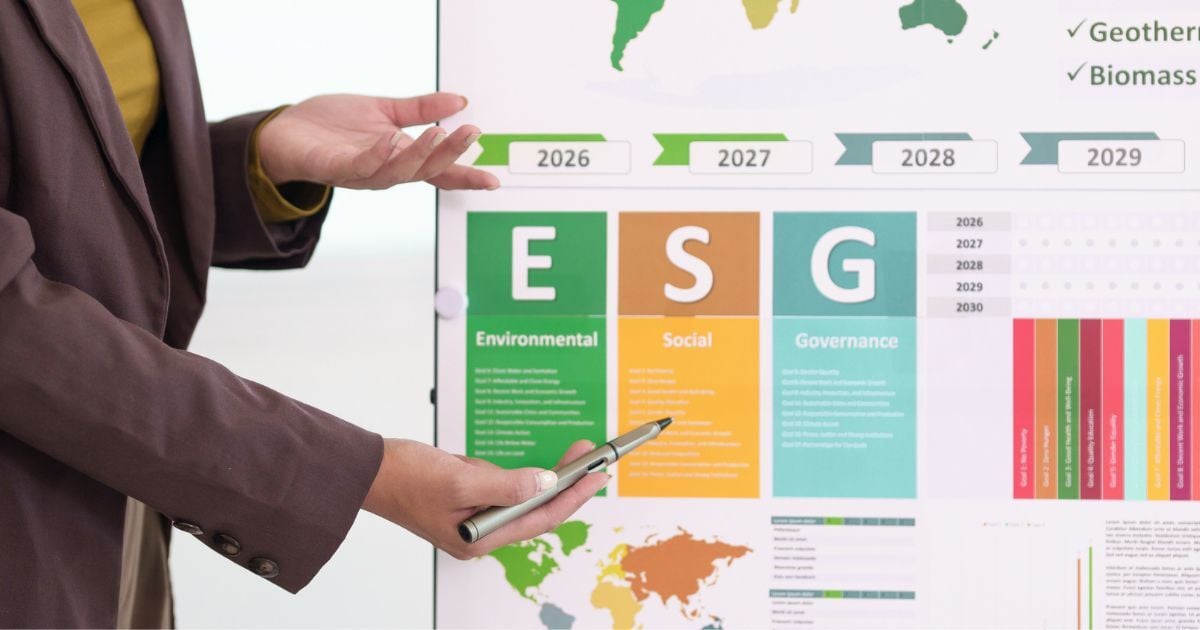
ESG ratings evaluate a company’s performance across Environmental, Social, and Governance (ESG) factors. They help investors, supply chain partners, and other stakeholders assess sustainability risks, performance, and transparency.
ESG ratings have become a powerful currency in today’s sustainability landscape. What started in the 1980s and 1990s as a niche investor tool has evolved into a mainstream instrument used by investors, supply chain partners, financial institutions, clients, and governments. Today, more than 600 ESG rating products exist worldwide.
For a growing number of companies, the question is shifting from whether to engage with ESG ratings to which rating best supports their strategic objectives and how they can improve their ESG score.
Investor ESG ratings versus B2B ESG ratings
An important distinction within ESG ratings is that between investor-focused and B2B-focused ratings.
Investor ESG ratings
Examples include MSCI, S&P Global, and Sustainalytics.
These ratings are primarily designed to support capital allocation. They rely heavily on:
- Public sustainability disclosures
- Annual reports
- Regulatory filings
- Media analysis and controversy screening
B2B ESG ratings
Examples include EcoVadis and CDP.
These are mainly used in supply chains and procurement decisions. They typically rely on:
- Company-submitted questionnaires
- Supporting documentation and evidence
- Structured sustainability reporting
A recent survey (ERM, Rate the Raters 2025) shows that companies often perceive B2B “active ESG ratings” as more credible due to their reliance on primary data. EcoVadis and CDP rank highly in perceived usefulness, followed by S&P Global ESG and MSCI.
Why ESG rating methodology matters
A major challenge in ESG ratings is methodological inconsistency.
According to the OECD report Behind ESG Ratings (2025), ESG scores can vary significantly for the same company due to differences in:
- Metric selection
- Weighting approaches
- Data sources
- Scoring models
Interestingly, higher ESG scores often correlate more strongly with disclosure quality and policy commitments than with actual environmental performance (such as emission reductions).
This means that companies that formalize and communicate sustainability strategies tend to perform better in ESG ratings—even if real-world environmental impact does not fully align.
Key differences between major ESG ratings
|
Rating |
Intended Users |
Data Collection |
ESG Scope |
Scoring Approach |
|
EcoVadis |
B2B / supply chain |
Questionnaire + evidence |
E, S, G |
0–100 + medals |
|
CDP |
B2B / disclosure-focused |
Structured questionnaire |
Primarily Environmental |
A–D grading |
|
MSCI |
Investors |
Public data + modeling |
E, S, G |
AAA–CCC scale |
|
S&P Global ESG |
Investors |
Hybrid survey + public data |
E, S, G |
0–100 score |
ESG ratings versus ESG performance
ESG ratings do not always reflect real-world sustainability performance.
While they are widely used in investment and procurement decisions, they are often influenced by:
- Disclosure completeness
- Policy formalization
- Reporting quality
This creates a gap between ESG reporting and actual environmental impact.
How to improve ESG ratings strategically
Companies looking to improve ESG ratings should focus on:
- Strengthening ESG disclosure practices
- Aligning reporting with recognized frameworks
- Improving data quality and consistency
- Documenting sustainability policies clearly
- Engaging actively in B2B ESG platforms
- Linking ESG strategy to measurable outcomes
Importantly, ESG ratings should not be treated as a standalone KPI but as part of a broader sustainability strategy.
ESG ratings in supply chain and procurement
Supply chain sustainability is increasingly driven by ESG assessments.
B2B ratings such as EcoVadis and CDP are often used to:
- Evaluate supplier sustainability risk
- Support procurement decisions
- Ensure compliance with ESG standards
- Benchmark suppliers across industries
This makes ESG ratings a critical business requirement, not just a reporting exercise.
Navigating ESG ratings strategically
ESG ratings have become an integral part of stakeholder expectations. However, methodologies vary significantly, and outcomes can differ depending on the rating applied.
Rather than treating ESG ratings as a box-ticking exercise, companies should approach them as part of a broader sustainability strategy that delivers real impact and long-term value.