

Introduction
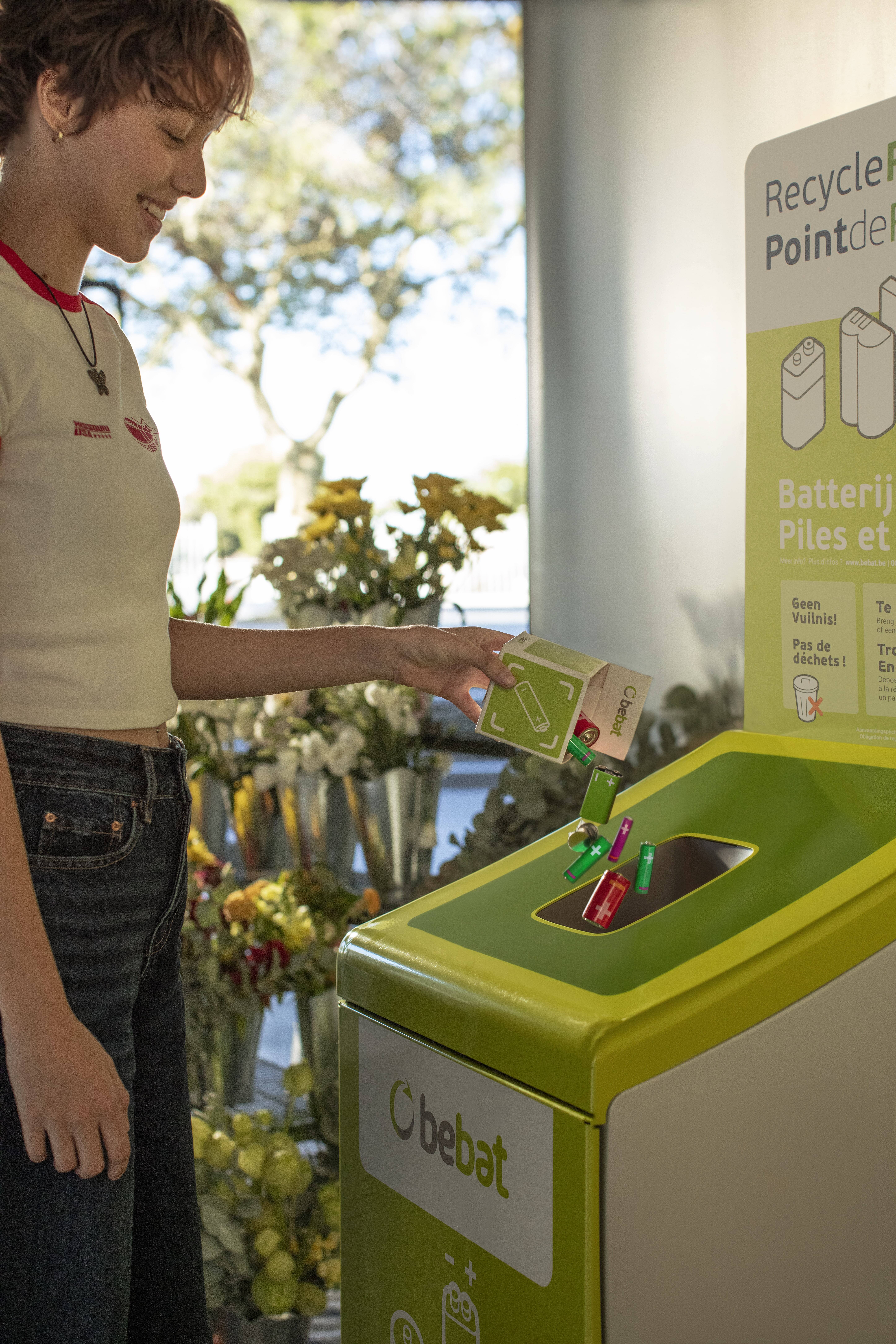
For more than 30 years, Bebat has been giving used batteries a second life by collecting, sorting and recycling them. As a leading Producer responsibility organisation in Belgium, Bebat achieves world-class collection results and continuously strives to recycle better and more efficiently. With more than 22,000 collection points across the country, their impact is significant.
Strategic challenge
Bebat faces complex operational challenges: complying with reporting requirements to the three Regions, accurately calculating performance indicators, obtaining reliable insights into battery composition, accurate financial planning and monitoring stocks at more than 22,000 collection points.
Approach
Möbius has been supporting Bebat for years with a variety of projects that contribute to their mission. On all these projects we offer project management, optimisation and standardisation of processes. Below are some specific problems where we provide support:
1. Drawing up policy reporting
Every year Bebat must submit an annual report and an implementation plan to the three Regions. The annual report looks back on the past year, while the implementation plan looks ahead to the coming year. Möbius supervises the entire process: planning start-up meetings with the necessary parties, coordinating with all actors involved, monitoring deadlines and taking care of the final editing and layout of the documents.
2. Calculating the collection rate
Every year, Möbius calculates Bebat's collection percentage. This ratio shows how many batteries were collected in relation to what was put on the market on average over the past three years. The calculation relies on a wide range of parameters and requires a thorough analysis and several rounds of refinement with Bebat.
3. Carrying out statistical analyses and guidance on sampling
In order to gain insight into the composition of the batteries collected - such as weight, number, chemical family and type, damaged/not damaged.... - Bebat regularly performs samplings with the support of Möbius. These are executed in collaboration with Sortbat, using advanced scales with cameras and automatic weight recording.
The sampling is representative of all of Bebat's collection channels (e.g. schools, retail...). Möbius takes ownership of training Sortbat employees, setting up the measuring equipment, monitoring the results, analysis and reporting.
Recently, Möbius also collaborated with Bebat and OVAM to perform a study on the collection potential of batteries from light electric means of transport, such as e-bikes, e-steps and one-wheelers (the so-called Light Means of Transport batteries). In this context, we conducted a specific sampling of bicycle batteries to determine their average life span.
4. Preparation of the annual financial plan and budgets
Möbius helps Bebat prepare their financial plan. Every year in May-June we make a forecast for the current year and the following five years. In September-October, we prepare the budget for the following year and update the forecast.
5. Calculating stock sizes at collection points
With more than 22,000 collection points, Bebat wants to get regular insight into the quantity of batteries stored at all those locations. Möbius developed a statistical approach to estimate this stock volume. We take into account collection frequency and the capacity of the various collection points in order to obtain a representative picture of the current stocks.
Results
The collaboration between Möbius and Bebat is multifaceted and in-depth, ranging from policy reporting, statistical analyses, strategic sampling to financial insights. With the correct project follow-up, Bebat can make informed decisions and further realize their environmental mission.