
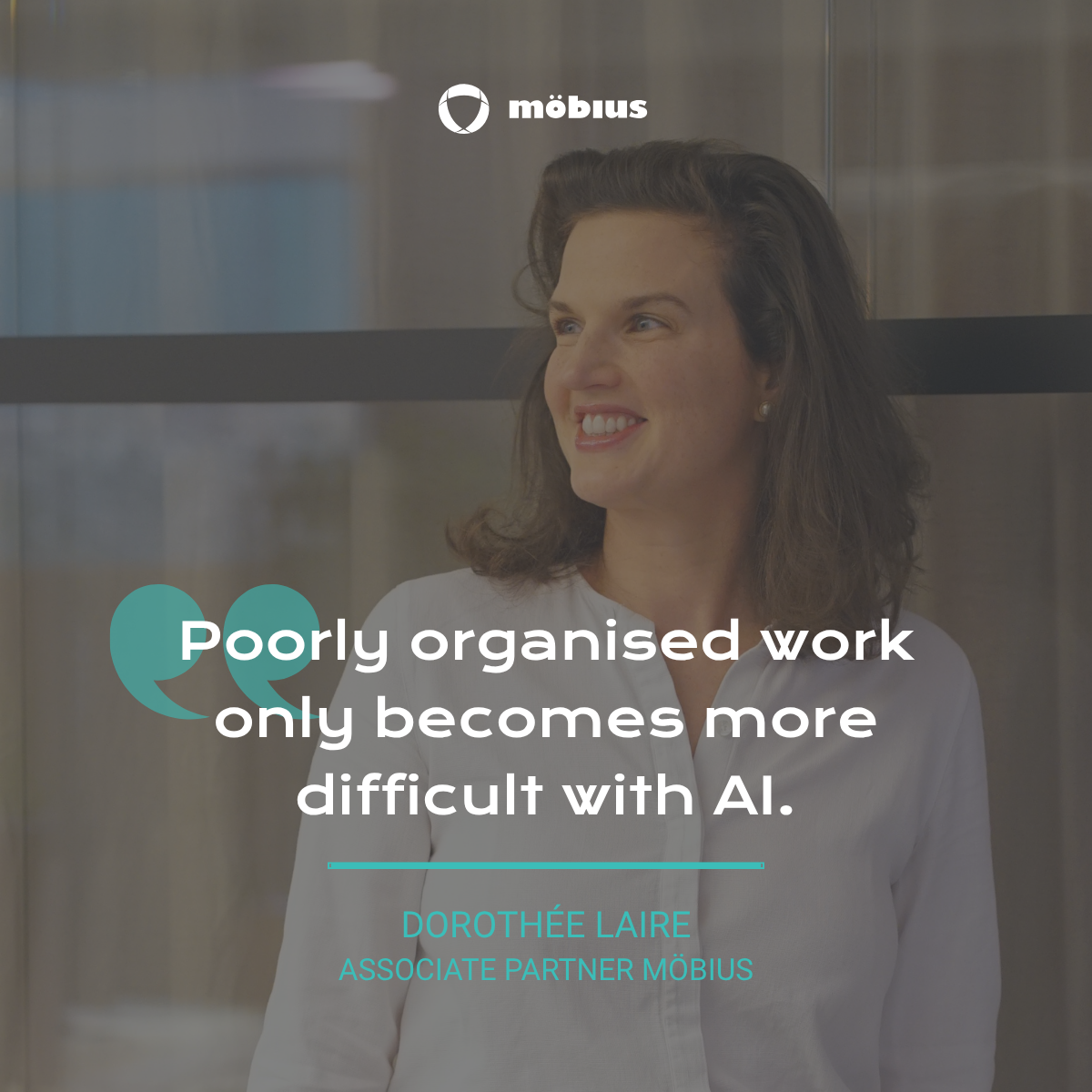
AI is sold to companies as efficiency, but in practice it leads to more control work, more doubt and more mental strain on employees.
The essence
-
Dorothée Laire is an associate partner at the business consultancy Möbius.
-
AI has been introduced in companies, but for many employees, this has actually made their work harder and less clear.
-
Companies must first decide what tasks should remain in human hands, and only then deploy AI to support their work.
Frederick Anseel is right to view OpenAI chief Sam Altman's New Deal with suspicion. It is hard not to become cynical when the top executive of a company that earns plenty from technological disruption simultaneously wants to provide the social response to that disruption.
But in the debate about AI and work, another fallacy looms. We like to talk about the big macro question: how many jobs will disappear? But the real disruption is already taking place today in a much more concrete way, in the companies themselves. Not just in layoffs, but in how work is gradually becoming more complex, more diffuse and more heavily organised.
Many organisations are putting AI on top of existing tasks. Employees keep their old responsibilities and are given new ones: writing prompts, checking output, detecting errors, justifying choices, catching exceptions. This is sold as efficiency, but in practice often results in extra control work, more doubt and more mental strain. AI then does not simplify the work.
Remain in control of where nuance, trust and accountability intersect. Only then should we consider which technology can support that.
Right order
The right order is exactly the opposite of what many companies do. The first question is which decisions, judgments and touch points you consciously want to keep humanas an organisation. Keep your own control over where nuance, trust and accountability come together. Only then comes the question of what technology can support that. An AI strategy is essentially a choice about how you organise work. The board, management and hr must work together to determine how roles and expectations are redrawn. Employees also need to know where AI adds value, where the boundaries are, how to deal with hallucinations, bias, confidentiality and persuasive-sounding errors.
The New Deal that matters, is the one enterprises write themselves. In the choices they make about what work disappears, what work remains human, and how to prepare their people for it. Those who fail to do so discover sooner or later that artificial intelligence makes poorly organised work even harder.
This article was taken from: De Tijd
.jpg)