
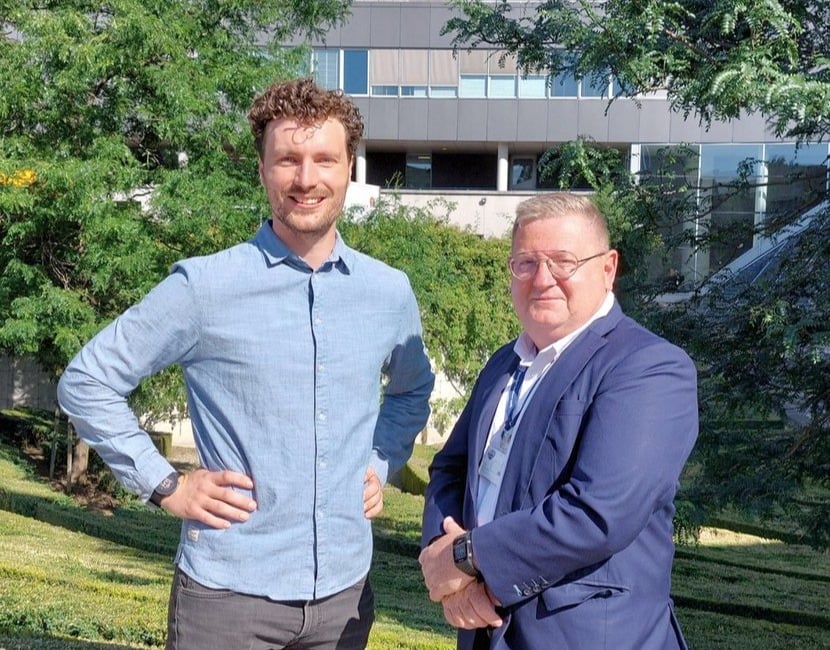
Frank Staelens knows the hospital world inside out. He has worked at OLV Hospital Aalst for 34 years and is now its Director of Processes and Quality. "My department uses data to deliver measurable improvements in quality. In short, that's my mission at the hospital. I've seen the hospital sector change enormously. Ten years ago, we were a 'soft' sector. But with the arrival of Value-Based Healthcare, we want to create more value for patients without costs rising at the same rate. Doing more with the same resources, or even fewer: that's what it really comes down to."
"We looked beyond our own walls at how businesses work. Terms like 'optimisation' and 'efficiency gains' are now completely normal in the hospital sector too. I don't think we work very differently from companies. The big difference is that we're not profit-driven. We aim to break even, and ideally a bit more of course, but any surplus goes entirely into innovation and better patient care."
"Data is essential to improving the quality of patient care without increasing costs."
"In fact, a hospital is an even tougher environment than an average company. We don't choose which patients we admit: they come in through the emergency department, through their GP, and so on. We don't set what our patients pay either; we work within the framework the government sets. Our room for manoeuvre is limited, so we have to be very creative to guarantee the best possible care with the resources we have."
Staelens calls it a difficult balancing act. "We're constantly walking a tightrope. Suppose robotic surgery costs us more than it brings in, but it clearly adds value for the patient. What do we do then? In practice, we'll always choose the patient, but that means we have to compensate for those costs one way or another. We make that kind of trade-off here every day."
Digitising and structuring a mountain of data
OLV Hospital bases these trade-offs on data, Staelens explains. "Hospitals have a huge amount of data. We've always had it; the big problem was that it wasn't anchored anywhere. It wasn't digitised and it wasn't structured. Thanks to solutions like Value4Health, we now get much more out of the data we have."
Mathieu Dierick was one of the people at Möbius behind the creation of Value4Health. He is an atypical consultant: he doesn't only advise hospitals, he also builds technology tools himself. "We started from the data hospitals already had. That's complex enough as it is. We definitely didn't want to add new data flows or impose new data registration. We brought together all the data sources, which were often scattered across different departments, and linked them. That allows hospitals to make new connections."
Anticipating new funding models
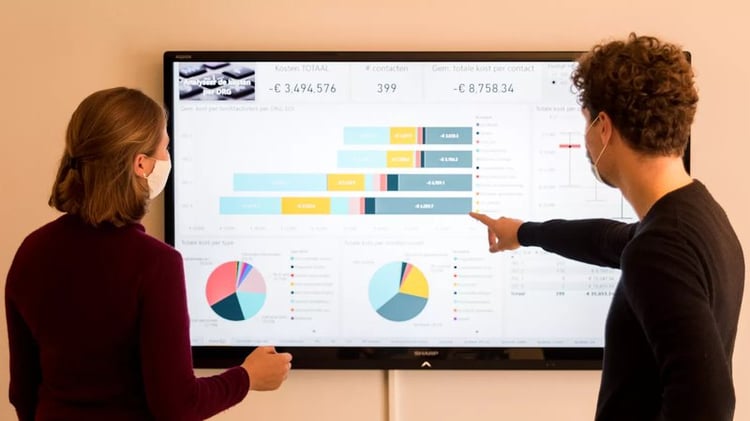
"With Value4Health, hospitals can map their costs and revenues in detail, at the level of pathologies or patient groups," Dierick explains. "That's especially important now that the federal government is reforming hospital funding. Today, hospitals are paid per service. In the future, the government wants to move away from this activity-based model, and hospitals will receive a fixed amount per patient group. To know what they can do with that budget, it's crucial that they have a reliable picture of the costs and revenues of each patient group."
"They can also benchmark themselves against other hospitals. Only by comparing their own costs and revenues with those of similar hospitals can they see where they're doing well and where there's still room for improvement. For a long time, the hospital world consisted of isolated islands. Only in recent years have we seen more and more networks forming, with hospitals sharing knowledge and experience."
Learning from other hospitals
It was mainly the benchmarking that convinced OLV Hospital to use Value4Health, says Staelens. "We already had a fairly accurate view of our costs and revenues. But you should never assume you know better than everyone else. There's no need to reinvent the wheel every time. We can certainly learn a lot from other large hospitals, just as they can learn from us."
"The biggest challenge for hospitals today is finding enough qualified staff. COVID-19 caused a large outflow; every hospital has seen many people leave. Some (hopefully) temporarily, others for good. We have to deploy our people as smartly as possible, with the right people in the right place, and make sure their work stays challenging without becoming too heavy.
All hospitals are in the same boat today. We can learn from each other. Maybe we need to organise ourselves differently? Maybe we need to rework our processes? The end goal, of course, is always the quality of patient care, which must demonstrably improve, or at least be maintained, with every change."
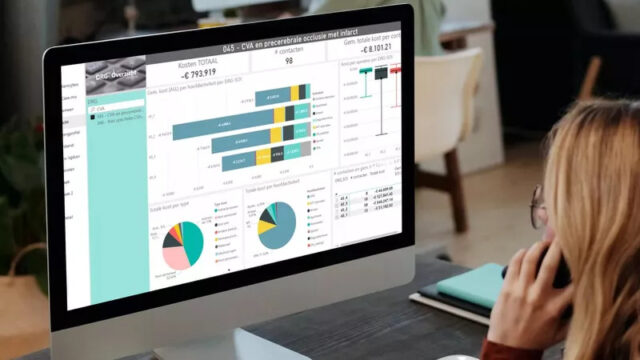
"Value4Health is a way to support Business Intelligence and finance profiles," Dierick stresses. "Hospitals face a major shortage there too. By partly digitising their work, we help close that gap. In the future, we also want to include care organisation in the benchmark. In projects, we've seen that some hospitals had overcapacity on their night shifts. They can then organise shifts differently and move people to day shifts. That way, you get more hands at the bedside with the same number of staff."
Customer experience and patient experience
Hospitals look to businesses to optimise their patient care and make it more efficient. But Staelens is convinced that businesses can also learn a lot from hospitals. "Every company says it's customer-driven and puts the customer first."
"The way we put our patients first, listen to them and involve them in improving quality: honestly, I don't see many companies doing that yet."
"The way we put our patients first, listen to them and involve them in improving quality: honestly, I don't see many companies doing that yet. We have a patient platform that meets four times a year. We set up focus groups to think together about how we can involve patients even more."
"At the individual level, we take two measurements for every single patient. The Patient Reported Outcome Measure (PROM) measures the outcome of a treatment as reported by the patient, and the Patient Reported Experience Measure (PREM) looks at how the patient experienced the treatment. So we measure the 'customer experience' of every patient, as it were. How many businesses do that?"
For Dierick, the greatest added value of Value4Health lies in collaboration. "At Möbius Healthcare, we help care organisations deliver more and better care at lower cost. That was the starting point for Value4Health, and it's still our essence. Benchmarking data is silver. Coming together and learning from how others work is gold."